
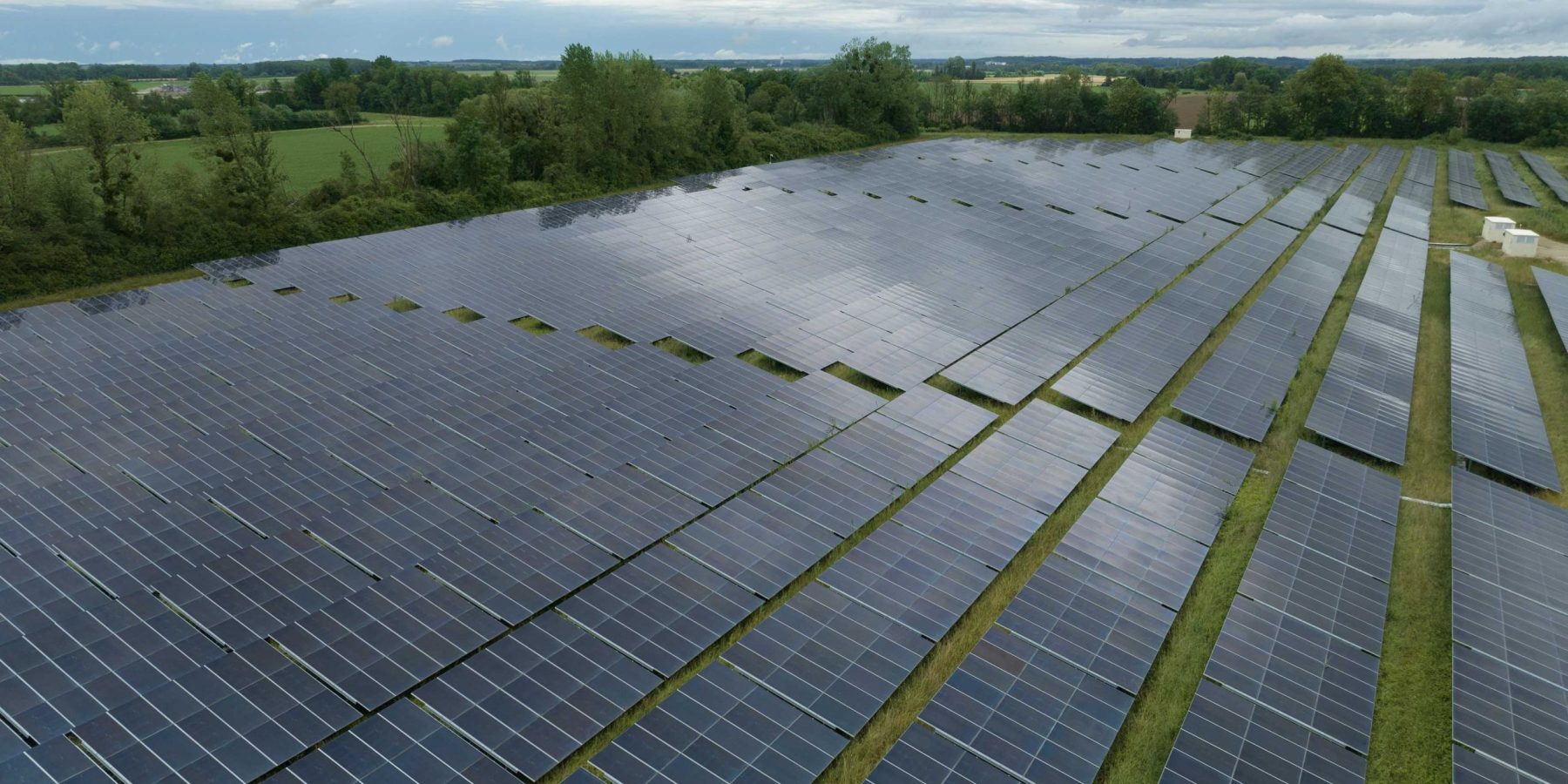
Before they can generate electricity on their own, photovoltaic power plants—and particularly construction site camps—require a temporary power supply. While this is typically provided by a temporary connection to the ENEDIS grid, sites that are isolated and off-grid rely on a diesel generator for power.
From April 2024 to January 2025, Urbasolar tested a hydrogen generator to power the construction site camp for its 10 MWp solar power plant in Amilly. An innovative solution for supplying green electricity that supports sustainable construction practices.
How does it work?
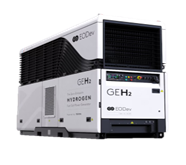
An EODEV GEH2® generator leased from ENERIA has been installed on the outskirts of the Amilly construction site. With a capacity of 110 kW, this unit converts hydrogen supplied in cylinders and oxygen from the air into electricity. This is a carbon-free solution provided that the hydrogen used is green, a choice that Urbasolar has adopted as part of its environmental strategy.
- 300 kg of hydrogen consumed to generate a total of 5,600 kWh.
- Zero greenhouse gas (GHG) emissions during generator operation; only water is produced at the generator’s output.
- 50% reduction in CO2 emissions, equivalent to: 3,760 kg CO2 eq for a GNR (Non-Road Diesel) generator vs. 1,860 kg for our GEH2® demonstrator.
Calculation based on the total lifespan, taking into account the generator’s depreciation over the project’s duration, as well as emissions related to fuel production, transportation, and the installation of the generator and fuel.
Feedback from the field:
Arthur Guillot, on-site construction project manager, shares his operational feedback on this innovative solution:
“In the field, using the GEH2® generator was very straightforward: it operates similarly to a conventional generator set, with identical start-up and shutdown procedures. However, we must anticipate the additional logistics involved in hydrogen supply, which requires special planning. The runtime in our test was around one to three weeks, and we could extend it by adding more racks on-site. The teams on-site also appreciated the convenience, as the unit generates no noise or odor.”
Innovation for the Environment
As part of its commitment to environmental excellence, Urbasolar sought to develop its expertise in hydrogen and explore carbon-free solutions to reduce GHG emissions and improve the environmental footprint of its construction sites. This initiative involved various internal departments, including innovation, construction, safety, and the environment.
The results are promising, both from an operational standpoint—given that this is the first real-world application of hydrogen—and in terms of emissions reductions compared to an NG-powered generator. However, a temporary connection to the power grid remains the most cost-effective and environmentally friendly solution and should be prioritized whenever available.