
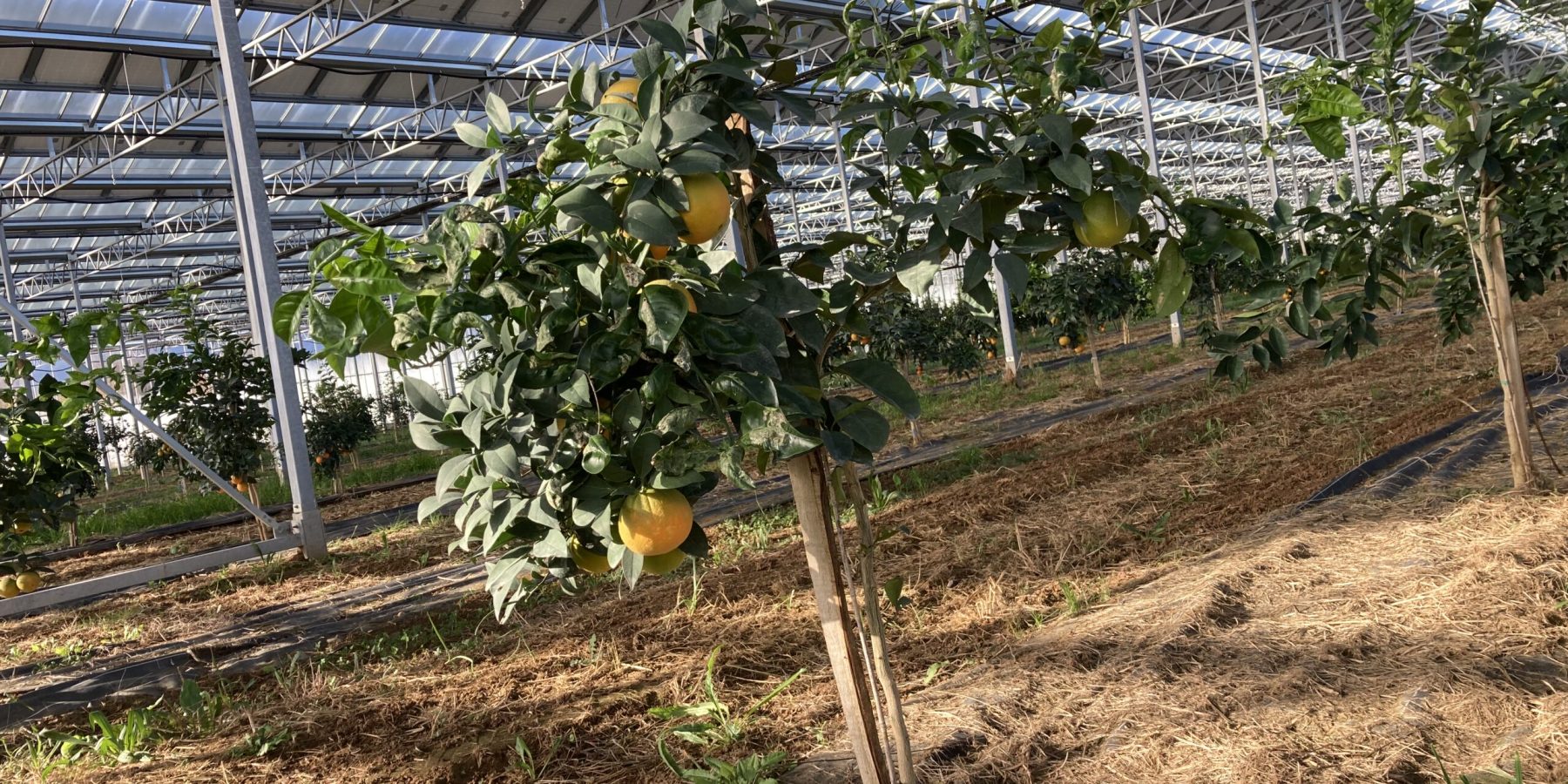
Faced with climate change and growing pressure on water resources, photovoltaic greenhouses and crop shading systems are emerging as a practical solution to preserve soil moisture and secure harvests. By providing a protective microclimate and optimized irrigation, these solar solutions help make orchards more resilient.
An agricultural context under water stress
Episodes of drought, extreme heat, and water stress are increasing across France. Crops evaporate more water to sustain their growth, soils recharge more slowly due to a lack of rainfall, and yields are becoming more irregular. In this context, greenhouses and shading systems equipped with solar panels are proving to be a concrete lever for protecting crops while reducing water consumption.
A microclimate that optimizes irrigation needs
By creating controlled shade, agrivoltaic structures modify the microclimate to benefit plants. Soils remain cooler, improving water availability in the surface layers used by crops. The air warms more slowly, limiting heat spikes and stabilizing thermal conditions. Humidity levels increase, and depending on the installation configuration, the structure can also reduce wind effects beneath the panels.
This combination reduces evapotranspiration and limits water stress, thereby lowering irrigation requirements. In several orchards, we have observed water savings of up to 40%, particularly during summer, when demand is highest. Crops thus become less dependent on water inputs and more resistant to heat waves.
Physical protection that secures production
Solar panels also play a direct protective role. They cushion heavy rainfall, block hail, and reduce sunburn on fruits caused by excessive radiation. In the event of extreme weather conditions, this limits losses and helps maintain consistent quality, even in difficult years. In several European demonstrators, researchers have analyzed how agrivoltaic systems can protect fruit, as well as their positive impact on size uniformity and production stability.
Under photovoltaic greenhouses: smart management to preserve water
Photovoltaic greenhouses go even further thanks to precise control of the internal climate. Managing temperature, humidity, and irrigation—combined with sensors and fertigation—makes it possible to supply water at the right time and in the right quantity. Internal evaporation is significantly reduced, and water volumes can be adjusted with precision. This increased control translates into significant water savings while preserving fruit quality.
Testimonials from our farmers and partners
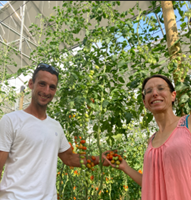
Lucie and Thibaut Grégoire, market gardeners under Serrilux photovoltaic greenhouses
For Lucie and Thibaut Grégoire, market gardeners in the Vaucluse region, combining a photovoltaic greenhouse with sensors and a fertigation system has reduced water use compared to their conventional tunnels, without compromising quality.
“In Urbasolar greenhouses, we grow eggplants, peppers, zucchini, tomatoes, and strawberries. Our farm is located in an area that is very hot in spring and summer and particularly windy, making crops highly water-demanding. Even though we are supplied by the pressurized network of the Société du Canal de Provence and are not subject to restrictions, we are committed to responsible water management. Thanks to the photovoltaic greenhouse, our fertigation system, and control sensors, we have managed to reduce our irrigation volumes by up to 40% compared to the same crops grown in tunnels. A real gain, without compromising production quality.”
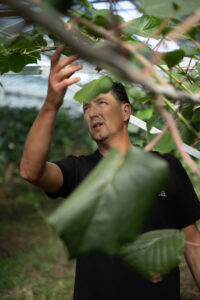
Stéphane Limousin, Technical Director at Vergers Cancel
In Castelsarrasin, Stéphane Limousin has also observed a reduction in water requirements for yellow and red kiwis grown under photovoltaic greenhouses, while maintaining expected yields.
“Yellow and red kiwis respond very well under Urbasolar Serrilux photovoltaic greenhouses. With an adapted irrigation system—micro-sprinklers, fertigation, sensors—we observe a reduction of about 30% in water needs compared to open-field cultivation. In total, this represents nearly 2,200 m³ of water saved per hectare, without impacting yields or the quality expected by our customers.”
Less water, less stress, more value
Greenhouses and crop shading systems therefore offer a dual benefit: they reduce water consumption while protecting crops from climatic hazards. They are becoming true tools for water and climate management for agriculture today and tomorrow.
https://www.ise.fraunhofer.de/en/research-projects/apv-obstbau-orcharding.html 2 Reher, T., Willockx, B., Schenk, A., Bisschop, J., Huyghe, Y., Nicolaï, B. M., … & Van de Poel, B. (2025). Agrivoltaic cultivation of pears under semi-transparent panels reduces yield consistently and maintains fruit quality in Belgium: Reher et al. Agronomy for Sustainable Development, 45(3), 25.
Photo Credit Urbasolar