
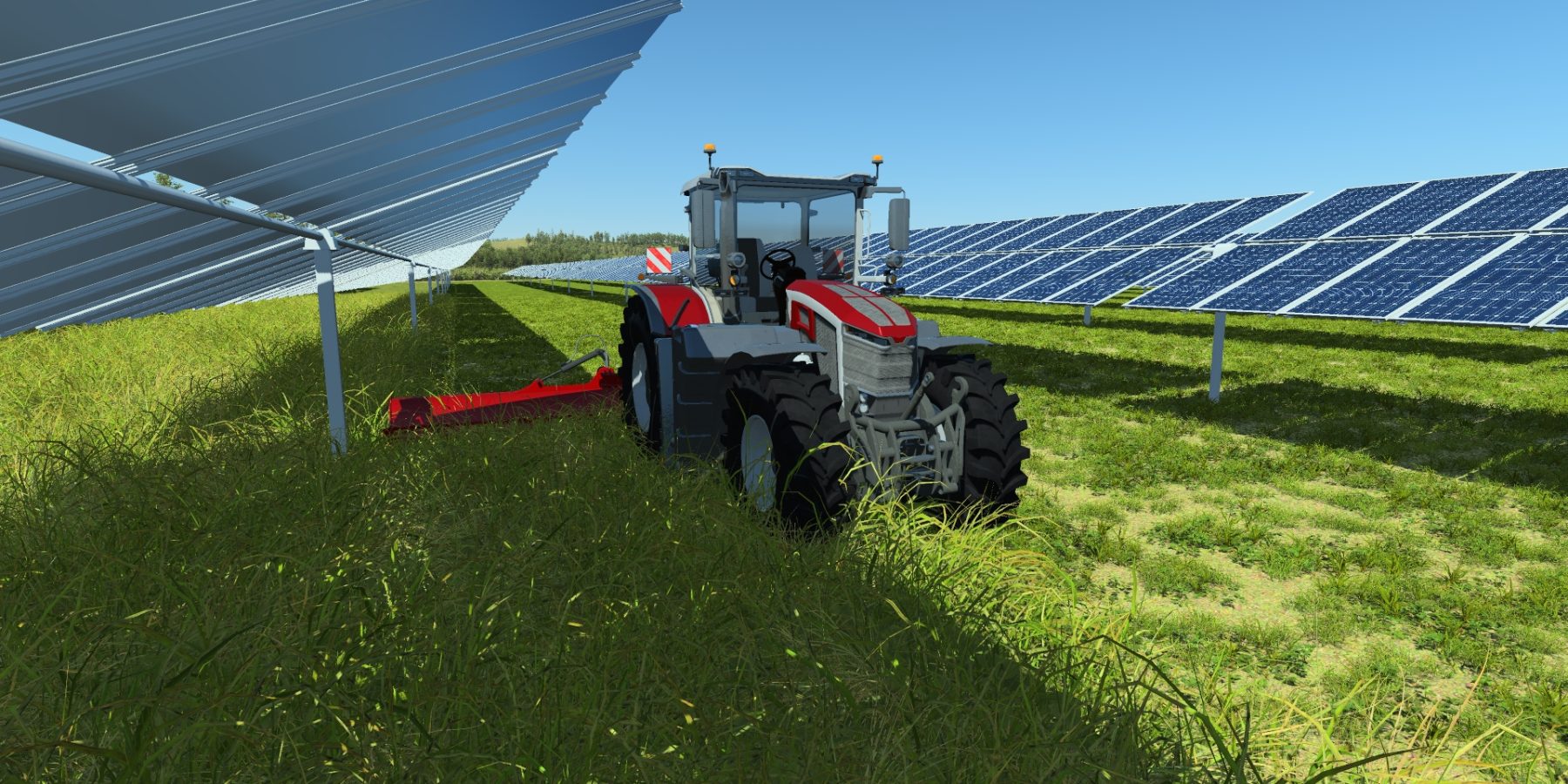
Faced with increasingly severe climate events, livestock farmers must contend with longer periods of drought, more frequent heatwaves, as well as episodes of frost and heavy rainfall. These weather hazards have a direct impact on grassland growth and the availability of forage resources.
Photovoltaic panels alter the climatic conditions at field level. The partial shade they provide reduces direct exposure to solar radiation and limits the effects of high temperatures on soils and vegetation. Since June 2024, Urbasolar has been conducting an agro-climatic monitoring programme across several photovoltaic plants located in a range of weather and geographical contexts. Initial observations highlight significant effects of solar panels on the microclimate:
- air temperatures are on average 2.5°C lower beneath the panels, with differences of up to 6°C during heatwaves;
- soils remain cooler in summer, with an average temperature reduction of 5°C and differences of up to 11°C, thereby preventing the critical threshold of 25°C from being exceeded for many plant species;
- wind speeds are significantly reduced, by up to 2.5 km/h;
- soil moisture is more than 25% higher during the summer season.
These conditions help limit evapotranspiration and improve water retention in the soil—an increasingly essential resource for maintaining vegetation during dry periods.
Delayed and extended grass growth
The agronomic value of agrivoltaic structures does not necessarily lie in increasing the total volume of biomass produced over the course of the year. Their main advantage lies elsewhere: they help modify the grass growth cycle and extend the availability of forage over time.
In spring, soils beneath the panels warm up more slowly than those in grasslands exposed to full sunlight. Grass growth may therefore be slightly delayed.However, when temperatures rise sharply from late spring and early summer onwards, the benefits become particularly visible. While conventional grasslands suffer from water stress and drying out, agrivoltaic areas retain more of their coolness and moisture. The grass therefore remains green for longer, limiting heat-related damage and helping maintain forage availability during a period when it generally becomes scarce. The same phenomenon can be observed at the end of summer. Because the soils are less affected by drought, vegetation often resumes growth more rapidly following the first rains in late August or early September.
Promising forage quality
Urbasolar’s agronomic monitoring also focuses on the quality of the grass produced beneath the photovoltaic panels.
The initial results show encouraging trends, including:
- higher nitrogen content;
- better protein digestibility;
- overall forage quality that is superior to that observed in the control areas.
These observations will need to be confirmed over several measurement campaigns, but they point to potential benefits extending beyond the simple preservation of forage resources.
An adaptation tool for the livestock farms of the future
In the context of climate change, agrivoltaics offers a practical response to the challenges faced by livestock farmers. By creating a more favourable microclimate for maintaining grass growth, photovoltaic structures not only help preserve grasslands during the most critical periods, but also extend grazing periods and improve the resilience of farms.